Music
Berwick Music Society launches eclectic 2026-27 music programme
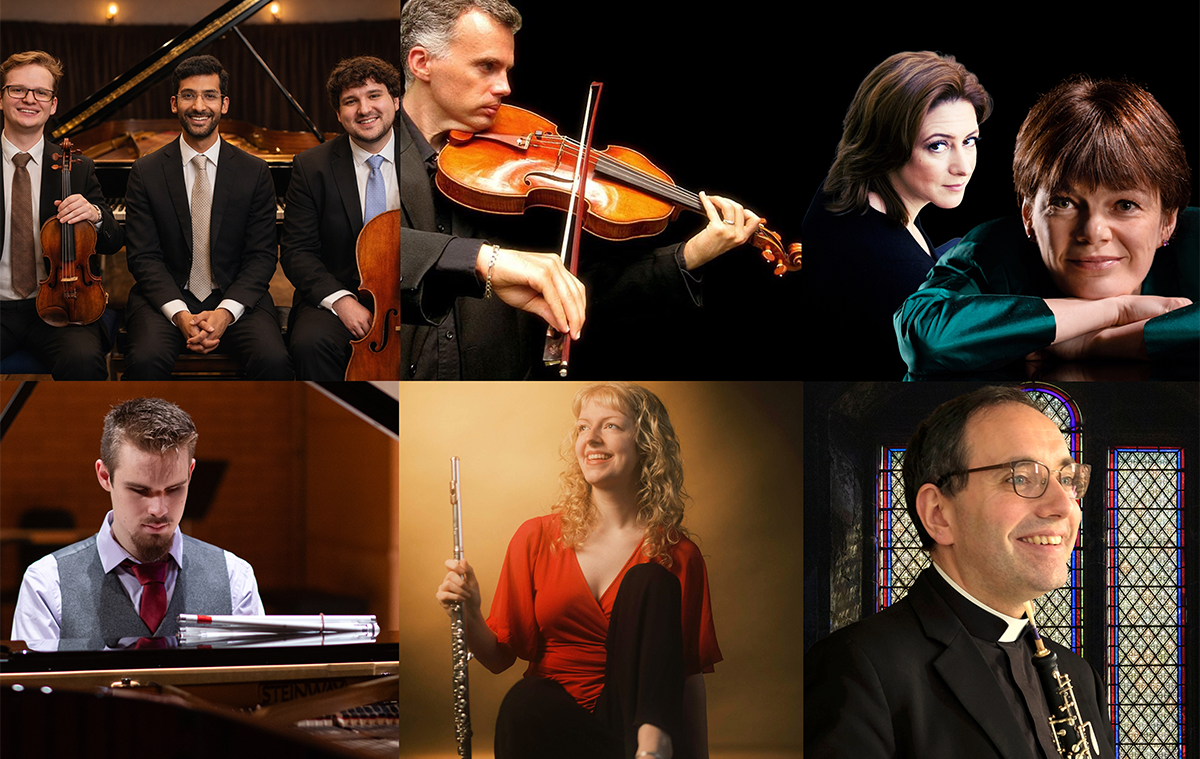
Berwick Music Society showcasing (clockwise from top left), Zvarder Trio, Scott Slapin, Alexandra Mackenzie and Ingrid Sawers, Ethan Loch, Cliodhna Scott and David Gilbert.
"We’re delighted to unveil the concert programme for our third season to contribute to Berwick’s fast evolving cultural offering,’ says the chair of the Music Society, Dr. Catherine Preston. ‘We’d like to thank everyone who attends our concerts and our many patrons who support us in our endeavours to showcase musical talent who might otherwise by-pass England’s most northerly town."
Berwick Music Society’s 2026/27 season launches this Autumn with a performance by internationally renowned Zvarder Trio at Berwick Parish Church on Saturday 3 October 2026, 14:00 - 16:00. Tickets are £15 on the door or via the BMS website.
Five further concerts will feature stunning viola, piano, cello, flute and oboe performances from internationally acclaimed musicians including 2022 BBC Young Musician of the Year finalist pianist Ethan Loch, French oboist, priest and academic David Gilbert and Scottish-born ‘Rising Star’ flautist Cliodhna Scott. The dates and timings of the programme, which all take on Saturday afternoons at Berwick Parish Church, are as follows:
- Sat 3 Oct 2026, 14:00 - 16:00
Zvarder Trio, (Violin, Cello and Piano) £15 - Sat 28 Nov 2026, 14:00- 15:00
Scott Slapin, (Solo Viola), £10 - Sat 23 Jan 2027, 14:00 -15:00
Alexandra Mackenzie & Ingrid Sawers,
(Cello and Piano) £15 - Sat 13 Feb 2027, 14:00 - 16:00
Ethan Loch, (Piano) £15 - Sat 13 March 2027, 14:00 - 15:00
Cliodhna Scott, (Flute, accompanied by pianist Julie Wilson) £10 - Sat 17 April 2027, 14:00 - 15:00
David Gilbert, (Oboe, accompanied by pianist Harris Playfair) £10
A £50 season ticket saves £25 whilst Under 18s have free admission. Music lovers who find the £10/15 ticket price prohibitive can email:
info@berwickmusic.org in complete confidence.
The Music Society’s ambition is to showcase work by composers and performers in Northumberland and the Borders and to encourage local community to become more involved in music. The Society also has a patrons scheme for music fans to show their personal support for the town’s thriving musical offerings. Further concert and patron scheme details can be found at www.berwickmusic.org.
Building confidence and creativity through music with Darren Holleywell
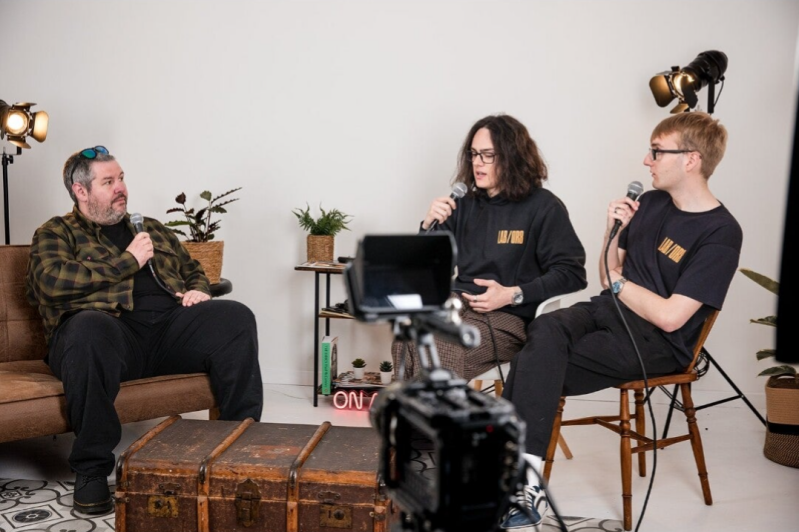
Amped Berwick was set up by musician and music educator Darren Holleywell, who grew up in Berwick and has worked in music education for more than a decade. The project grew from his experience working with young musicians locally and seeing the need for clearer pathways from learning music to performing, collaborating and building creative careers. In this feature we chat with Darren to find out more about the project today and his plans for the future.

What gap did Amped Berwick set out to fill in the local music scene?
Amped was set up to bridge a gap between learning music and actually doing something with it. There’s plenty of talent in Berwick, but historically there hasn’t been a clear pathway from lessons into real opportunities like performing, collaborating, or building a career.
Nothing we’re doing is completely new; it comes from years of working as a musician in Berwick and listening to young people and the wider community. We’re not trying to parachute something in from the outside. The focus has always been on responding to what people actually need and building something that works for Berwick. That’s what Amped is about, connecting those dots and creating a joined-up route from learning through to real-world experience.
Why is it important that young people in Berwick have access to music, regardless of background?
Access to music shouldn’t depend on income, background or postcode. In a rural town like Berwick, opportunities can be limited, and realistic. Music can have a huge impact on confidence, wellbeing and identity, so it’s important that those opportunities exist locally and are genuinely open to everyone. Berwick deserves the same access to opportunities as big cities.
What are the biggest barriers young people face when trying to get into music and how does Amped tackle them?
The biggest barriers are usually cost, access to instruments, lack of confidence, and not knowing where to start. Amped tackles this through low-cost or subsidised sessions, free drop-ins, mentoring, and access to instruments where possible. It’s about removing as many obstacles as we can so people feel able to give it a go.
How do you make music accessible to those who might not have instruments, training or confidence?
A big part of our approach is removing practical barriers. One of the key ways we do that is through the Amped Instrument Library, which gives young people access to instruments they might not otherwise be able to afford. That means someone can try guitar, drums or keys without needing to invest upfront.
Alongside that, we create a really welcoming, low-pressure environment. People can come along to a drop-in, ask questions, try things out and build confidence at their own pace. It’s about making sure that a lack of equipment, experience or confidence doesn’t stop someone getting started.
How does music help build confidence in young people?
Music gives people a way to express themselves and be heard. For a lot of young people, that’s incredibly powerful. Over time you see confidence grow, whether that’s speaking up, performing or simply feeling more comfortable in themselves. It often becomes a space where they feel they belong.
Have you seen any standout transformations in young people through the project?
Having worked in music education for over a decade, and now through Amped, one of the most rewarding parts of the work is seeing people grow over time. I get to meet musicians at all different stages in their journey, and it’s that progression that really stands out.
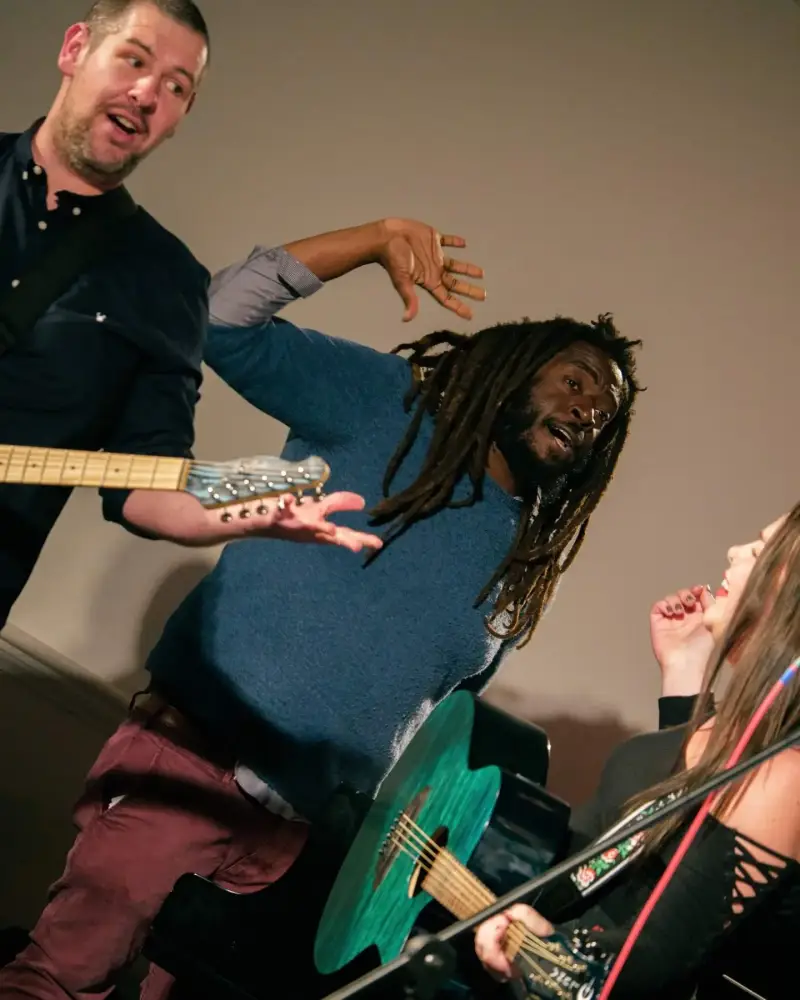
I’ve seen young people find their voice, play their first gigs and build friendships with like-minded musicians. Some have gone on to become active, touring musicians, while others have found something just as important: a sense of confidence, belonging and a way to connect with their community and the wider world. If you want to see that in action, come down to The Straw Yard during the Fringe. Our Breakthrough artists are a brilliant example of what can happen when young people are given the right support.
It’s a passionate group, and every one of them is developing in their own way. That shift, from uncertainty to confidence, is what it’s all about.
Amped offers everything from lessons to live performance. Why is that full journey so important?
Because learning in isolation only gets you so far. The real growth happens when people apply what they’ve learned in real situations. By connecting lessons, mentoring and performance, people can see a clear pathway and start to take their music more seriously. I also want different generations of musicians to connect. There is an unbelievable depth and breadth of incredible musicianship locally. We are all in this together and the journey never ends.
How do you help young people move from ‘having a go’ to taking music more seriously?
We give them real opportunities and support them through it. That might be mentoring, helping them prepare for a performance, or connecting them with other musicians. Once someone sees what’s possible and feels supported, their mindset starts to shift.
How do you ensure the project is genuinely open to everyone, not just those already engaged in music?
We actively design it that way through free entry points like drop-ins, affordable pricing and a strong focus on inclusivity. It’s not about being the best; it’s about being willing to take part. We also work closely with local partners to reach people who might not normally engage with music. Listening is often the first step. You don’t have to be a musician to engage. You might come to watch a band and leave feeling inspired to attend more shows, try singing, or explore something behind the scenes like sound engineering, marketing or journalism.
For some people, it opens doors they didn’t even realise were there. That’s why it’s so important to build more local opportunities. The more visible and accessible music is, the more likely people are to find their way into it in their own time and on their own terms.
How important is it that this is based in Berwick and reflects the local community?
It’s everything to me. I grew up in Berwick, and the town has supported me massively over the years, from organisations like Rotary and the Town Council, to individuals who quietly hold the scene together. One person in particular is Brian Martin from the Music Gallery. He’s an unsung hero of Berwick’s music scene. When I couldn’t afford a guitar, he made sure I had one. He helped me get gigs, gave advice, and was always there in the background supporting musicians. People like Brian are the reason a lot of us got started. As he moves into retirement, I can’t stand the thought of others not having that same support.
I dread to think what my life would look like without music, and that’s what drives Amped. It’s about making sure the next generation has access to those same opportunities, rooted here in Berwick and shaped by the community around them.
What role do mentors and working musicians play in inspiring young people?
They’re absolutely central to what we do. Amped is built around the strength of Berwick’s music community, and we’re lucky to have a really rich pool of experienced musicians who are willing to give their time and support others coming through. I couldn’t do this on my own. People like Richard Keech, who supports our BreakThrough programme, and others including Iain Petrie, Bodhi Turnbull, James Sanderson and John Reed have all been incredibly generous with their time and knowledge. That makes a huge difference. It means young people aren’t just learning in isolation; they’re connecting with real musicians, gaining insight into how things actually work, and seeing what’s possible. It helps make the whole thing feel real and achievable.
Why is performing live such a key part of what you do?
Because it’s where everything comes together. Performing builds confidence, gives a real sense of achievement, and helps people connect with an audience. It turns learning into something tangible. It also has a wider impact. Live music brings people into venues, supports local businesses, and contributes to the town’s economy. Places like Berwick already have the building blocks: a rich heritage, a strong cultural offer, and local businesses that genuinely care about what’s happening in the town. By creating more opportunities for live performance, we’re not just supporting musicians; we’re helping strengthen that whole ecosystem. It benefits the artists, the audiences and the businesses that make Berwick what it is.
What impact does something like the Amped Music Festival have on young performers?
It gives them something to aim towards. If you’re rehearsing endlessly with no clear outcome, it can become disheartening. Having a real opportunity to perform changes that. It gives purpose to the work and a sense of progression.
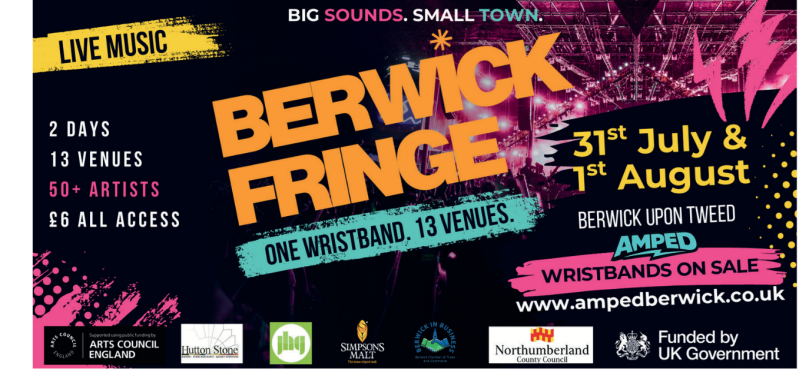
For me, I used to live for the monthly band nights when I was a student at Berwick Academy (then Berwick High School). It was where I met up with friends, watched their bands and felt part of something bigger than just exams. That sense of belonging stays with you. The Amped Festival creates that same kind of moment. It gives young people a platform, a goal, and a chance to be part of something real—playing to audiences, supporting each other, and building confidence in a live setting. It’s something we want to continue developing as Amped grows.
What would success look like for Amped in 3–5 years?
Success would mean a sustainable music hub in Berwick with regular programmes, strong partnerships, and clear pathways into education, employment and performance. A big part of that is creating paid opportunities locally. I want to see musicians, sound engineers, technicians and creatives able to find real work in the area, rather than having to leave to pursue it elsewhere.
That means building a system where workshops, gigs, mentoring and live events all connect and support each other. Alongside that, it’s about continuing to remove barriers, whether that’s cost, access or confidence, so more people can take part and progress. Ultimately, success means more people in Berwick not just engaging with music, but building something sustainable from it.
If a young person is reading this and thinking ‘music isn’t for me’, what would you say to them?
Often that comes from not really knowing what engaging with music actually looks like. It doesn’t have to mean being on stage. You might enjoy listening, writing lyrics, making beats, helping behind the scenes, or simply being part of something from the sidelines. There are lots of ways in. That said, I’m a realist—music isn’t for everyone, and that’s fine. The important thing is finding something that is. Whether that’s sport, art, making, theatre or something else entirely, there’s more going on in Berwick now than people realise.
"My advice would be to get involved in something locally. Go and speak to places like Berwick Youth Project and see what’s out there. You might find something that clicks in a way you didn’t expect. Don’t let life just happen — go and get involved!"
www.ampedberwick.co.uk Follow Darren at @ampedmusiccic
Music, wellbeing and creativity, why it’s never too late to start
We hear from Richard Keech about how music arrived in his life, when it was needed. After a difficult period that forced him to slow down and reassess, picking up an instrument became a way back. Now playing and writing regularly with his duo, R&R and soul band Circus in the Sky, based in Berwick, Richard talks openly about how music supports his wellbeing, and why creating bonds with musicians can be just as important as playing the music itself.


"Music is now part of my every day."
Despite growing up around music, I never really gravitated towards it as a younger man. I was a visual artist - painting, drawing and taking photographs. Playing music wasn’t for me. In 2017, mental health difficulties had taken me out of work and I was trying to figure out how to keep dark thoughts at bay. I was dealing with a loss and grief, and honestly, didn’t know where to turn. I bought a cheap ukulele from Amazon to occupy my mind, learned a handful of chords and began using those few chords along with some of my own words.
The first time I played in public, I included one of my own songs. It was called Disbelief, and was about losing the house I’d grown up in losing that sense of safety. I was still recovering, still processing everything, and I poured all of it into that song. Afterwards, people told me how much it had resonated with them; it was the first time I realised that my grief could be transformed into something beautiful. Since then, through the challenges that life throws at us, music has been a constant.
Writing, playing, meeting new people, collaborating - all of it has helped me see thing me see things differently and feel stronger.
Music is now part of my every day. Along with full-time work and family life, I juggle rehearsals with different bands.
Mondays are spent playing with Swefn, who are newer to the community. Wednesdays are with my friend Ruth Alder-Bateman, working on our duo R&R, laughing and talking nonsense between songs — which we then try and build into our act.
And whenever we can, I’m either writing new songs with my soul brother, Iain Petrie, or rehearsing with our band, Circus in the Sky, which is always a challenge with six busy people, but always worth it.
There’s something really special about creating, rehearsing and performing something together. I love the small moments: harmonies finally clicking, mistakes turning into new ideas, the deep talks after rehearsals.
Ruth and I hosting the Repas 7 Hogmanay celebrations as R&R, or headlining the Berwick Food and Beer Festival with Circus in the Sky and hearing people sing our own songs back to us, is something I’ll never forget.
Music has completely changed my headspace: practice calms me; writing helps me process things; performing gives me energy like few things can. It’s built my confidence and helped me find a life/work balance. Most importantly, it’s helped me connect with so many people from all walks of life. I was 35 when I bought a ukulele and learned my first three chords. Now I’m 43, playing live as often as I can, surrounded by a community that feels like home.
@musicbyrandr
@circusintheskyband
@richard_keech_artist to see his paintings and scribbles.
Photo Credits
Solo on double bass: Nadia Ho Brautaset
Duo R&R: Raymond McRobbie @p2ogs
Band Swefn: Raymond McRobbie @p2ogs
Circus in the Sky Artwork:
@MM Skyes and @richard_keech_artist
Issue 1: Spring / Summer 2026
Celebrating the best in classical and contemporary music
Berwick
Music
Society

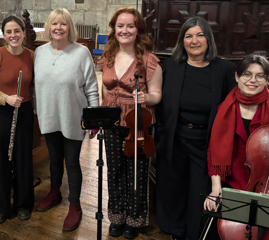
From left to right
Serenna MacLellan, Flute;
Dr Catherine Preston, Chair
Berwick Music Society;
Elinor Roderick, Violin;
Professor Maria Chester The Arts Society and Anoxia Nistor, Cello
Until recently, Berwick was one of the few local towns not to have a Music Society. This all changed with the launch of Berwick Music Society’s first concert season in 2024.
The Society’s second season has featured concerts from Berwick Brass, saxophonist Carl Raven, The Tim Kliphuis Jazz Trio, an opera masterclass with soprano Yvonne Barclay, art historian Maria Chester’s Baroque spoken word and live music showcase with The Gal Trio, and pianist and composer Ieva Dubova.
Berwick Music Society’s mission is to celebrate the best classical and contemporary music performed by professional soloists and ensembles. Its ambition is to showcase work by composers and performers in Northumberland and the Scottish Borders as much as possible, while also reaching out to the local community to encourage more involvement in music.
A small dedicated team works behind the scenes to make everything happen, backed by a growing number of patrons, the Community Foundation North East, and the team at their wonderful venue, Berwick Parish Church.
Plans for a third season are already well under way, so keep an eye on the website and social media for updates.
Thinking about joining a classical choir ?
Berwick
Arts Choir


For generations, Berwick Arts Choir has been a much loved part of Berwick’s musical life, bringing people together through the shared joy of classical choral singing.
With roots stretching back to the 1940s, the choir is now looking ahead to its 80th anniversary in 2027, continuing a tradition built on friendship and beautiful music.
This spring, the choir performs at Berwick Parish Church on 18 April, singing Handel’s Messiah Parts 2 and 3, followed by a festive concert in the same venue on 12 December. Under the guidance of Musical Director Marion Scammell, rehearsals take place every Thursday from 7–9pm at Spittal Community Centre.
New singers are always warmly welcomed. There are no auditions and whilst reading music is helpful, a love of music and plenty of enthusiasm matter more.
The choir will also be hosting two singing workshops on 25 July and 22 August for both members and non-members, offering an opportunity to improve singing skills.
Contact the choir for more information: berwickartschoir@gmail.com
Visit www.berwickartschoir.co.uk