Art
The Glazed Landscape with Paddy Hartley
Paddy Hartley is a Berwick-based multidisciplinary artist whose thrown ceramics are deeply influenced by the Northumbrian coast, its geology, weather and tides, resulting in works that evoke erosion, atmosphere, volume and transformation.


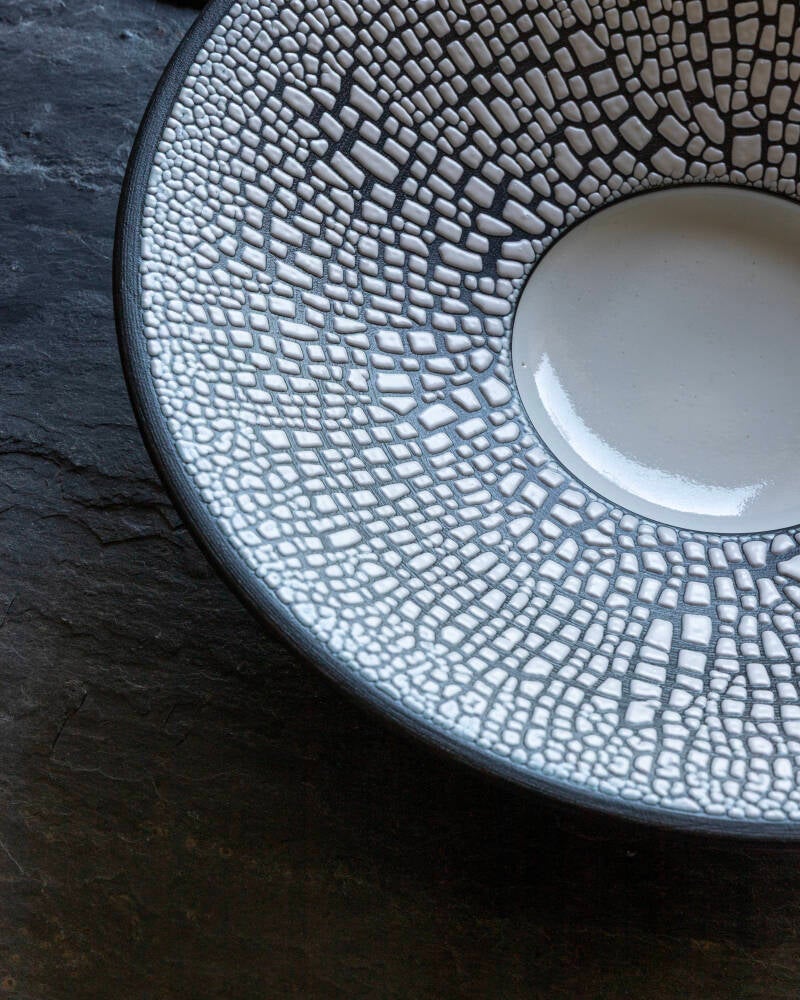
"There’s a stillness and intensity to it that’s difficult to explain but impossible not to absorb. That atmosphere inevitably finds its way into the work."
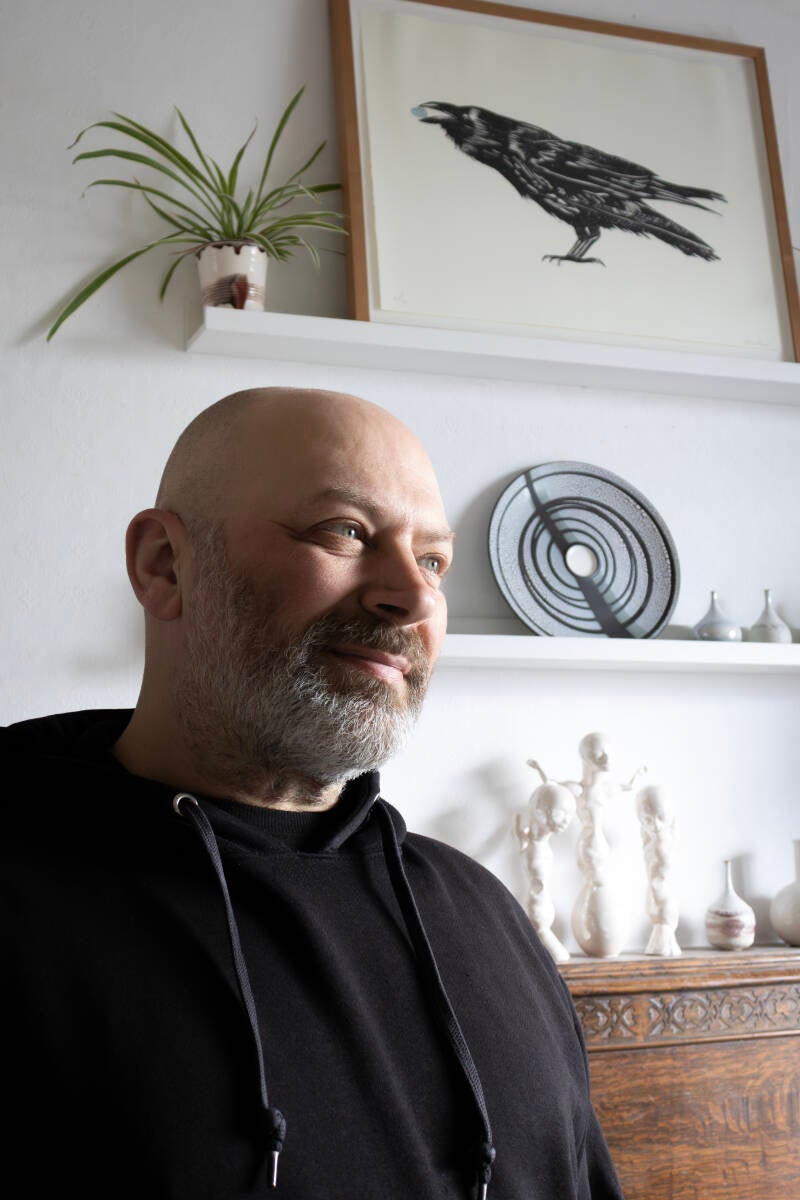
What first drew you to Berwick and when did it begin to feel like 'home'?
I imagine a lot of people answer this in the same way: the view from the northbound train crossing the Royal Border Bridge. It’s the only time I’ve ever passed through a place on a train and immediately thought, "I want to get off here." That was in 2016, and a few months later I came back specifically to do exactly that. The town had a presence that appealed to me straight away. In 2020 I moved from London to Berwick permanently, and it’s the best decision I’ve ever made.
How has living here changed your creative direction?
Before moving to Berwick, much of my work focused on external subjects and historical narratives, such as injured First World War servicemen who underwent facial reconstruction, or fragile sculptural works exploring memory and loss. The work was always rooted in other people's stories. Living here shifted something.
Berwick gave me the space, physically and mentally, to make work that feels more personal and reflective without becoming directly autobiographical. The ceramics I make now are much more concerned with atmosphere, emotion and perception. They’re less about documenting something specific and more about trying to translate a feeling or experience into material form.
Your thrown ceramic works are rooted in the Northumbrian coast; how do you translate landscape into ceramic form?
I’m not creating literal representations of the landscape so much as evoking it. The heavy winter skies influence the monochrome palette I work with, while forms in the landscape — the Monument out in the bay, circular rock formations on the Ladies Skerrs — often become starting points for the vessels themselves.
The glazes then allow me to build surfaces that suggest things like barnacles, tidal erosion, ice pancakes or weathered stone. I’m very interested in the relationship between micro and macro landscapes, where a ceramic surface can feel geological, atmospheric and biological all at once.
Are there specific locations around Berwick that directly influence particular pieces?
The view from my kitchen window was really the starting point: the bay, the lighthouse and the Monument. I spend a lot of time watching the changing light there, especially moonrises over the sea when everything becomes almost completely monochrome.
There’s a stillness and intensity to it that’s difficult to explain but impossible not to absorb. That atmosphere inevitably finds its way into the work.
Your work captures meteorological and topographic change; how do you physically achieve those textures and surfaces?
A lot of it comes from extensive glaze testing and an understanding of how different materials behave together. I layer glazes in different sequences, experiment with multiple firings, and continually test combinations until surfaces begin to develop the qualities I’m looking for. The process can be very slow and is always subject to change based on results. Some glazes are so fragile they’ll literally begin fragmenting and falling away before they even reach the kiln. But that instability is part of what interests me.
The surfaces often feel as though they’ve been weathered or eroded rather than simply decorated and I’m capturing that and making it permanent by exposing it to intense heat.
There’s a strong sense of time in your work. What draws you to this theme?
My relationship with time changed significantly after receiving a cancer diagnosis in 2024. More than anything, it created a heightened awareness of how precious time is, especially after working for so long to build a life in Berwick.
That experience made me far more conscious of cycles, transitions and fleeting moments in the landscape — moonrises, tides, seasonal shifts and changing weather. Those things already mattered to me, but they now carry a much deeper emotional weight and sense of presence.
Do you see your ceramics as documenting the landscape, or interpreting it?
An evocation is probably the best definition. I’m not interested in accurately recording a place. I’m more interested in trying to capture something intangible in being here, such as the emotional and sensory experience of the coastline, the weather and the changing light. It’s a bit like trying to reconstruct a memory. The work sits somewhere between observation and feeling.
Do you have a favourite walk or view that continually inspires you?
The walk between the lighthouse and the lookout point is probably the most important part of my daily routine. I call it my Crow Walk with the Crowhort, because over the past three years a group of crows have gradually started accompanying me, even in terrible weather. That ritual has become incredibly grounding for me.
What is it about Berwick that keeps you creatively engaged?
It’s the constant state of change. The weather can transform dramatically several times in a single day, and the light here is extraordinary because of it. One moment everything feels heavy and slate-grey, and the next the entire bay is illuminated with sudden colour and rainbows.
Then there’s the seasonal movement of wildlife – geese migrating, swallows and swifts returning, dolphins appearing in the bay, seals along the rocks. There’s always something changing, something re-emerging, something disappearing. I feel incredibly fortunate to live here and to be able to make work in response to it.
Find out more @paddyhartleyceramics www.paddy-hartley.com
The wellbeing benefits of making art outdoors
Ali Edwards is an illustrator and designer based in Berwick who creates hand-drawn maps and illustrations inspired by the landscapes and history of the North East and beyond. Ali also teaches a range of workshops to help inspire others to explore nature and heritage through their creativity.


Let me introduce ‘Green Sketching’
My creative practice is fuelled by my love of the natural world, with much of my self-led illustration and design inspired by nature-based subjects. But actually getting outside and drawing what I can see is something I’ve only come to quite recently, thanks to the encouragement I found when I read The Green Sketching Handbook by Dr Ali Foxon.
It’s a wonderfully practical little field guide that encourages us to relax, let go of self-criticism, and rediscover the joy of being in nature. One of its key messages is that drawing isn’t some rare talent handed out to a lucky few, it’s a skill, and skills can be learnt, practised, and enjoyed by anyone. The drawings we make outside don’t have to be beautiful, accurate, or shareable, in fact, the focus is far more on noticing nature, observing it and then sketching it, or rather the process of observational sketching, rather than the end result.
Ali Foxon was a climate scientist who started sketching as a hobby during a particularly stressful time in her life. Being a scientist, she was really interested in how sketching made her feel calmer, less stressed and less anxious – particularly when she was sketching outdoors. So she dived into researching why the act of drawing the natural world impacted her mental state so positively.
Why it matters – for us and for nature
There’s a growing body of scientific evidence that shows time spent not just in nature, but connecting with it, has benefits for our physical, mental and emotional health and wellbeing. Conversely, being disconnected from nature has a host of negative impacts on both us and nature – we’re less likely to care about something we don’t notice.
We know that the UK is one of the most nature-depleted countries in Europe. One in six species are now at risk of extinction, and more than half of our biodiversity has already been lost. And yet, the more we lose, the less we seem to notice. Part of the problem – even for people who consider themselves ‘outdoorsy’ – is that we can walk / cycle / run in nature without paying attention to it; and we can hear a bird without consciously listening to it.
Studies have shown that the biggest impact happens when we go beyond being in nature and begin to more proactively connect with it. This is where sketching can be a powerful tool – slowing down, observing closely and recording what we notice through the physical act of sketching (rather than the super quick snap of a phone camera) begins a process of active engagement, strengthening our connection with the natural world and making us more keen to look after it. As an added bonus, strengthening our connection with nature also delivers us more personal benefits for our mental health and wellbeing.
In short, engaging actively with nature makes us happier, calmer and generally healthier, as well as making it easier for us to take decisions in our daily lives that will benefit nature (whether that means ditching the car for public transport, or installing solar panels for our roofs).
Slow down. Pick up a pencil. Start noticing nature.
Green Sketching is such a joy-filled activity and is perfect for anyone who wants to get drawing but is constantly fighting against that little voice in their head telling them that they’re ‘not an artist’ or that they ‘can’t draw’.
In Green Sketching, we learn how to quiet that voice (and all the other noise in our heads) by focusing on simple, observational sketching exercises that help us to exist in the moment, creating without pressure. And best of all, Green Sketching gets us outdoors, noticing the nature around us and perhaps opening our eyes to things we’d never have seen previously. I warmly invite you to attend a workshop with me, if you’re based in (or visiting) Northumberland or the Scottish Borders.
You can find details of upcoming workshops at: www.coostie.co.uk/workshops-and-events